

Key Takeaways
- Dementia changes the brain, so word trouble is never stubbornness or a choice.
- Watch for missing words, repeated stories, and more hand gestures.
- Communication shifts through early, middle, and late stages.
- Simple habits like eye contact, a calm tone, and a gentle touch build connection.
- Specialized memory care in Wenatchee supports both your loved one and you.
How Dementia Reshapes the Way You Connect
You sit across from someone you love, and the words just won’t come for them. A sentence stalls. A name slips away. It can feel lonely for both of you, and you want a way back to each other. Wenatchee Memory Care understands these quiet struggles, and its relationship-based memory care shows that connection stays within reach.
Dementia changes the brain regions that handle language and meaning, so your loved one struggles to find words and follow conversations, but a warm, patient connection is still very much within reach.
Why Dementia Changes the Way Your Loved One Communicates
Dementia damages the brain regions that store words and link them to meaning. When a sentence breaks off mid-thought, the brain simply loses the path to the next word. That gap is real, and it is not in their control.
This is never stubbornness or a refusal to try. Your loved one wants to connect just as much as you do. Naming that truth takes pressure off both of you.
These changes often show up early, even before a diagnosis. You might notice small word hiccups long before anything feels serious. Spotting them early helps you adjust how you talk to each other.
Common Signs of Communication Trouble
Small shifts in everyday talk often signal what’s happening inside the brain. Once you know the signs, you can respond with patience instead of worry. These are some common warning signs to watch for:
- Trouble finding the right word, or swapping in a close one
- Repeating the same story or familiar phrases
- Leaning on gestures and pointing instead of speaking
- Trailing off before a sentence is finished
How Dementia Affects Understanding
Listening takes more effort now. Your loved one needs extra seconds to take in what you say, so a slower pace helps every time. Give that pause without jumping in.
Names and relationships can blur, too. Your mom might know your face brings comfort even when your name escapes her. That bond stays, even when the label slips. Big questions can overwhelm fast. Offer two simple choices instead. “Tea or water?” feels easy, while “What would you like to drink?” can stall everything.
Vision and Hearing Add Challenges
When eyesight or hearing fades, talking gets even harder. Your loved one may miss a soft word or a small gesture across the room. That can look like confusion when it’s really a sensory gap. Regular eye and ear checks make a real difference. Clear glasses and working hearing aids open the door to easier conversations. Small fixes here can bring back moments you both miss.
How Communication Shifts Through Each Stage
The way you connect changes as dementia moves through the 7 stages of dementia. Each stage asks for a slightly different approach, and meeting your loved one where they are keeps the bond strong.
Early Stage
Meaningful talks are still very much possible here. Share stories, ask about memories, and enjoy real back-and-forth. Just give a little extra time for replies. Speak directly to your loved one, never around them. Even when a friend or nurse is in the room, keep them part of the conversation. That respect protects their dignity.
Middle Stage
Quiet, one-on-one moments work best now. A calm room with little background noise helps your loved one focus on you. Turn off the TV before you sit down. Lean on simple questions and clear steps, like:
- Ask yes or no questions like “Are you warm enough?”
- Break tasks into one small step at a time
- Pause and wait before adding more
Late Stage
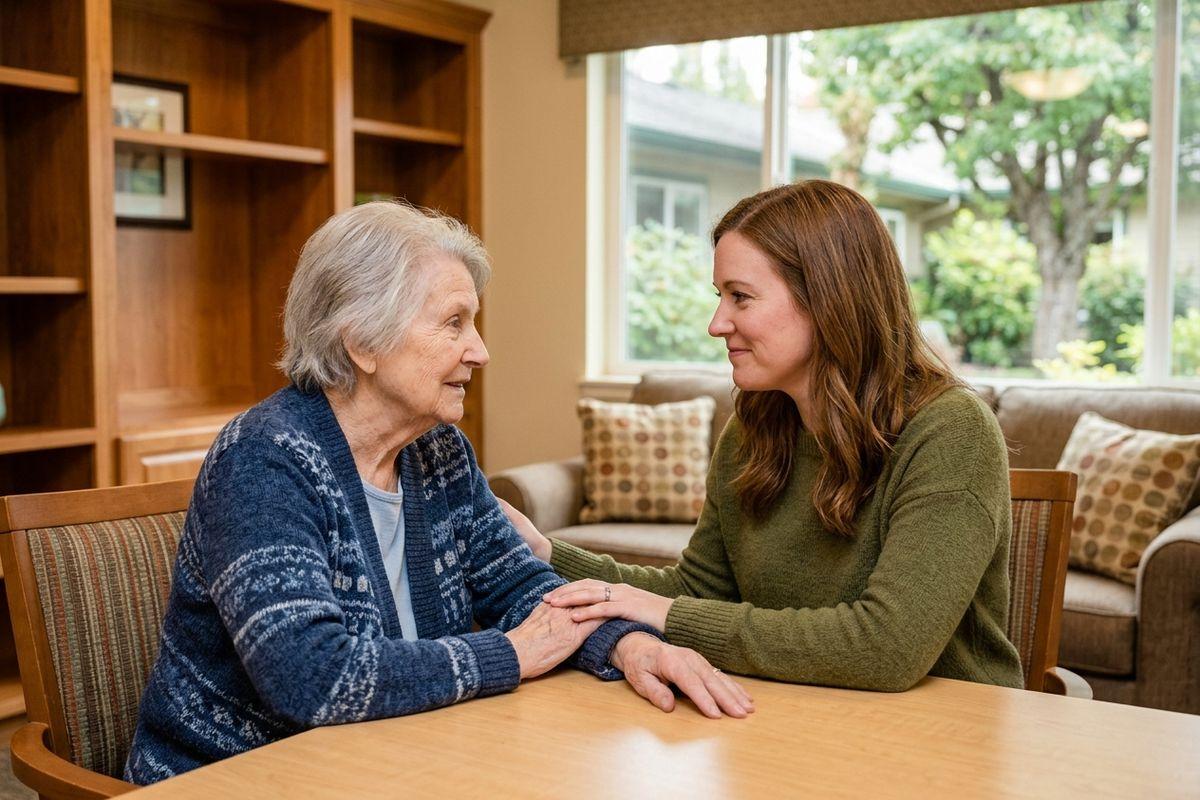
Words may fade in the late stage of dementia, but connection does not. Nonverbal cues become your main language now. A warm smile and soft eye contact say plenty. A gentle hand on theirs, a familiar song, or a calm face can bring real comfort. Your loved one still feels your presence, even in silence.
Simple Ways to Connect Better Every Day
Small habits make daily talks smoother. Approach from the front so you don’t startle them, then meet their eyes. Use a calm, friendly tone, and listen with your full attention.
Body Language and Touch Matter
Your hands and face carry meaning that words sometimes can’t. Point to the cup, mime brushing teeth, or nod along as they speak. These cues fill the gaps. A reassuring touch on the shoulder offers comfort all on its own. It tells your loved one they’re safe with you, no words required.
What to Avoid
A few habits add stress without helping. If frustration ever rises, these calm de-escalation tips can guide you. Steer clear of these habits:
- Correcting or arguing over details
- Rushing their response
- Talking over them or finishing every sentence
- Quizzing them with “Do you remember?”
How Specialized Memory Care in Wenatchee Supports Connection
You don’t have to carry this alone. At Wenatchee Memory Care, the team lives by a simple idea, “Do With, Not Do For.” That means partnering with your loved one to find purpose and joy each day.
The trained team here, nestled near the Cascade Mountains, knows how to meet your loved one through every stage. Short-term respite care gives tired family caregivers a real break, too. Reach out today to book a tour and see this caring community for yourself.